
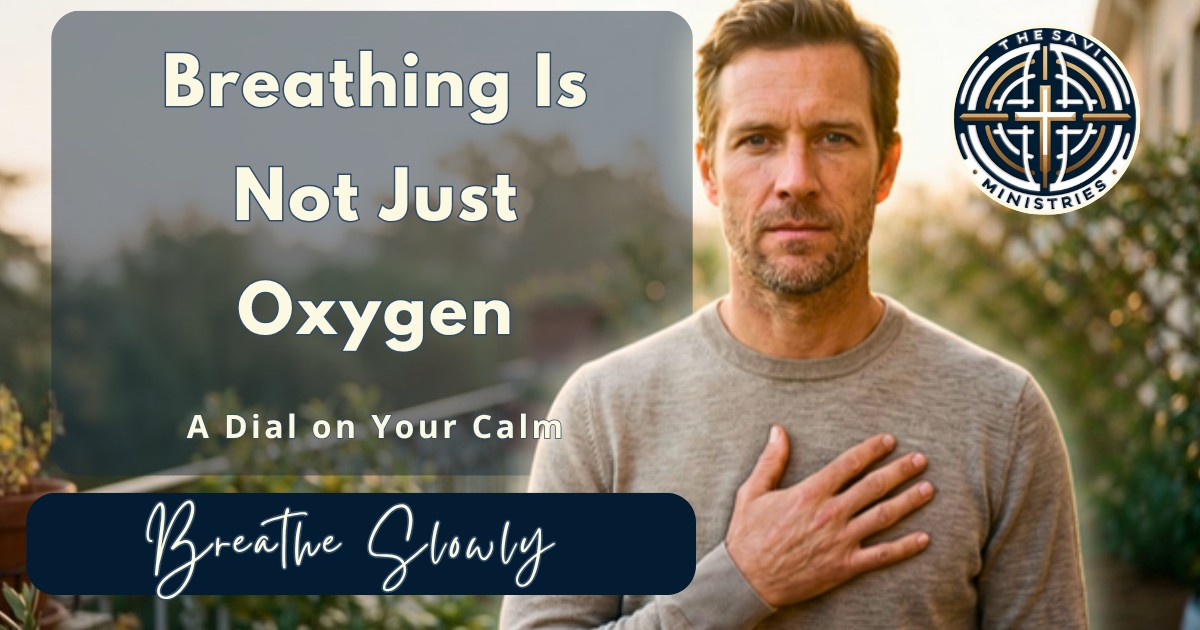
Breathing Is Not Just Oxygen
The way we breathe, fast or slow, shallow or deep, is in constant conversation with the nervous system.
We think of breathing as simple plumbing, oxygen in and carbon dioxide out, a task the body handles without us. That is true, and it is also the smallest part of what the breath does. The way we breathe, fast or slow, shallow or deep, is in constant conversation with the nervous system. Breathing is not just oxygen. It is the one place where we can reach in and steady the part of us that runs on its own.
Over the past weeks we have followed the body's quiet systems, fiber and water, light and the inner clock. Most of them run far below our control. This week we turn to the rare exception, the one automatic rhythm we can also take in hand, and what happens to the rest of the body when we slow it down.
The dial we forget we hold
Most of the body's housekeeping runs on the autonomic nervous system, the part that speeds the heart, tightens the gut, and floods us with alertness without ever asking. We cannot will our heart to slow or our stress hormones to fall. But breathing sits on a strange border. It runs automatically when we ignore it, yet the moment we pay attention, we can take the controls. And because breathing is wired into the same system that governs heart rate and stress, changing the breath changes them too. Slow the breath, and the body downstream begins to slow with it.
What fast and slow each say
The body reads the pace of the breath as a message. Quick, shallow breathing high in the chest is the breath of effort and alarm, and it tells the nervous system to stay on guard, lifting heart rate and tension. Slow breathing, low in the belly, especially with an exhale longer than the inhale, sends the opposite signal. The long exhale gently presses the brake, the vagus nerve, that calms the heart and settles the body. We spend much of a modern day in the first kind of breathing without noticing, braced at a desk, shoulders high, breath shallow. The body, reading that, never quite stands down.
The breath is the one door into the part of us that runs on its own. Slow it, and the body remembers how to rest.
What the research found
The effect is measurable. In a 2018 review published in Frontiers in Human Neuroscience, researchers gathered the studies on slow breathing, the kind around six breaths a minute, and looked at what it does to the body and mind. Across the evidence, slow breathing raised heart rate variability, a marker of a calm and adaptable nervous system, and shifted the balance toward the parasympathetic, the body's rest-and-recover branch. It also tracked with steadier mood and a greater sense of calm and control. A few minutes of slowing the breath, it turns out, leaves a real and measurable trace on the whole system.
The invitation this week
This week, use the breath you already have. Once a day, take a few minutes to breathe slowly and low, letting the exhale run longer than the inhale, perhaps a count of four in and six out. You do not need a technique or an app, and you do not need long. You are not forcing calm. You are simply picking up the one dial the body left within reach, and reminding the rest of you that, for this moment, there is nothing to brace against.